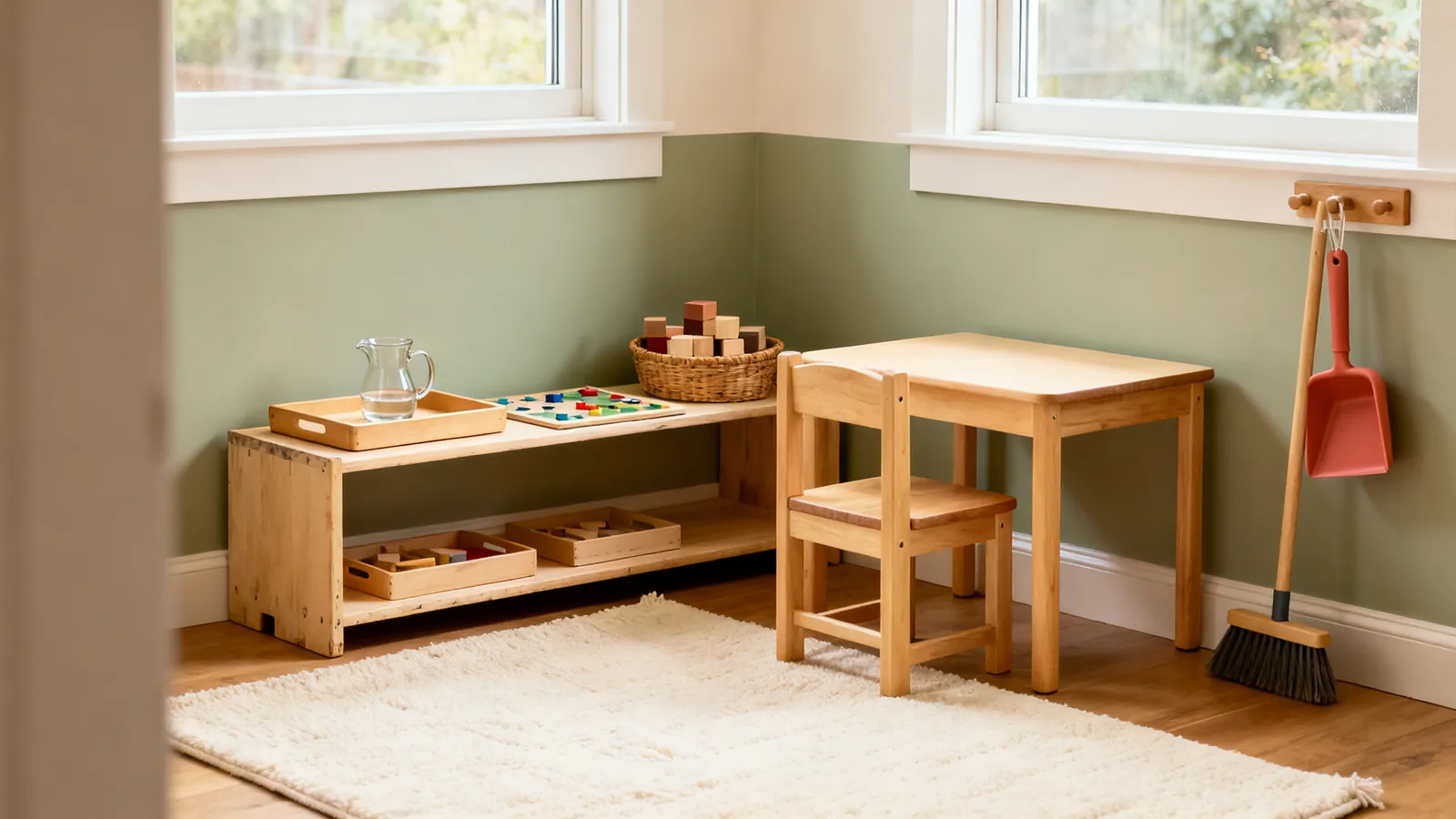
Montessori on a Budget: How to Create a $200 Complete Learning Environment at Home
As an Amazon Associate we earn from qualifying purchases. Links on this page may be affiliate links. Learn more
Think Montessori education is only for wealthy families who can afford $300 wooden rainbow stackers and $500 climbing triangles? Think again.
The truth: Maria Montessori designed her educational approach for impoverished children in Rome. Her philosophy was never about expensive toys-it was about child-centered, hands-on learning with purposeful materials.
You can create a rich, authentic Montessori learning environment for your child with a modest budget. This guide shows you exactly how to set up a complete Montessori home for just $200, including:
✅ Essential toys for each developmental area ✅ Budget-friendly alternatives to expensive items ✅ DIY Montessori materials you can make for free ✅ Secondhand shopping strategies ✅ What to skip and what to prioritize
Spoiler: Your child won't know the difference between a $5 thrift store wooden puzzle and a $35 brand-new one. What matters is the learning experience, not the price tag.
- Practical Life - Kitchen tools, cleaning set, pouring pitchers (~$40)
- Sensorial - Stacking rings, wooden puzzle, play dough tools (~$35)
- Language - Alphabet puzzle, magnetic letters, art supplies + FREE library (~$45)
- Mathematics - Counting bears, pattern blocks, number puzzle (~$40)
- Cultural/Science - Globe, magnifying glass, watercolors, science tools (~$40)
💡 Grand total: ~$197 store-bought + unlimited free DIY activities
The Montessori Budget Mindset
Before we dive into specific purchases, let's establish the right mindset for budget Montessori.
What Montessori Education Really Requires
Essential (FREE or Cheap):
- ✅ Your presence and observation
- ✅ Respect for the child
- ✅ Prepared environment (organized, accessible)
- ✅ Uninterrupted work periods
- ✅ Natural materials when possible
NOT Essential (Expensive):
- ❌ Branded "Montessori" toys
- ❌ Perfectly matching wooden everything
- ❌ Instagram-worthy aesthetics
- ❌ Every single Montessori material
- ❌ New purchases
The 80/20 Rule for Budget Montessori
High-Impact, Low-Cost Items:
- Building blocks
- Books from library
- Art supplies
- Kitchen items for practical life
- Nature items (free!)
Low-Impact, High-Cost Items (Skip These):
- Fancy sensory bins
- Designer wooden toys
- Specialized Montessori furniture
- Themed learning kits
- Brand-name materials when generic works
Three Budget Strategies
Strategy 2: DIY
- Many materials are easy to make
- Free printables online
- Household items repurposed
Strategy 3: Borrow & Rotate
- Library toys and books
- Toy swaps with friends
- Buy Nothing groups
Complete $200 Montessori Setup by Developmental Area
Maria Montessori organized learning into five areas. Here's how to cover each on a budget.
Practical Life ($40)
Goal: Independence, coordination, concentration, care of self and environment
📌 Found this helpful? Save it to your Montessori board!
What to Buy
1. Real Kitchen Tools (Not Toy Versions)
Real kitchen tools teach real skills. A child-safe knife set around $12 gives kids genuine food prep practice, fine motor development, and meaningful kitchen participation.
2. Small Pitcher & Cups for Pouring Practice
Pouring activities build hand-eye coordination and the independence children crave. A small glass pitcher ($8) and matching cups ($6) are Montessori staples.
Shop the set:
3. Child-Sized Cleaning Tools
A real broom, dustpan, and cloth (~$15) teach care of environment - one of Montessori's core practical life pillars.
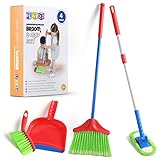
Practical Life Total: $41
Free DIY Practical Life Activities
Cost: $0
1. Transfer Activities - Two bowls + spoon from kitchen. Transfer beans, rice, water, or pompoms. Builds concentration and coordination.
2. Food Preparation - Banana slicing (butter knife), orange peeling, egg cracking, cucumber slicing.
3. Self-Care Station - Mirror from dollar store ($1), hairbrush, tissues, hand lotion.
4. Pouring Station - Two pitchers from kitchen, a tray, sponge for spills, water or dry beans.
5. Dressing Frames (DIY) - Old clothing items. Practice buttons, zippers, snaps, ties. Mount on cardboard.
6. Plant Care - Small watering can (dollar store $1), indoor plant, spray bottle, cloth for dusting leaves.
7. Table Setting - Practice setting place mats with napkins, plates, and utensils.
Sensorial ($35)
Goal: Refine senses, make distinctions, classify, order
📌 Found this helpful? Save it to your Montessori board!
What to Buy
1. Wooden Stacking Rings or Nesting Cups
Classic size-gradation work. Stacking rings teach color recognition and problem-solving for around $12 new (often $3-5 at thrift stores!).

2. Simple Wooden Peg Puzzle
Visual discrimination and fine motor in one. A wooden peg puzzle runs about $10 new - or grab one at a thrift store for $1-3!

Thrift Store Tip: Wooden puzzles are EVERYWHERE at thrift stores for $1-3 each!
3. Play Dough + Tools
Tactile exploration and fine motor strengthening. Make your own dough ($3 in ingredients) and grab a basic tools set ($10).

Sensorial Total: $35
Free DIY Sensorial Activities
Cost: $0-5
1. Sensory Bottles - Empty plastic bottles filled with rice, water+glitter, buttons, or pompoms. Seal with glue. Cost: Free.
2. Texture Cards - Cardboard squares + sandpaper, fabric, felt, foil. Blindfolded matching game. Cost: $2.
3. Sound Matching Bottles - Small containers filled in pairs with rice, beans, bells, sand. Match by sound. Cost: Free.
4. Color Sorting - Muffin tin from kitchen + small colored objects. Cost: Free.
5. Smell Jars - Small jars + cotton balls with vanilla, lemon, cinnamon, coffee. Cost: $1.
6. Nature Basket - Dollar store basket ($1) + pinecones, shells, rocks, leaves, sticks. Cost: $1.
7. Fabric Matching - Fabric scraps (ask fabric store for free samples). Cost: Free.
Language ($45)
Goal: Vocabulary development, pre-reading, writing readiness, communication
📌 Found this helpful? Save it to your Montessori board!
What to Buy
1. Library Card (FREE!)
Your best Montessori investment: $0. Unlimited books, regular rotation keeps interest high. Borrow 10-15 board books, 8-12 picture books, or 5-8 chapter books weekly.
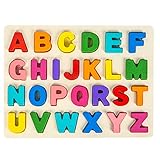
2. Wooden Alphabet Puzzle
Letter recognition + fine motor in one tool. A wooden alphabet puzzle runs about $18 - or hunt for one at garage sales for $3-5.
3. Magnetic Letters Set
Spelling practice, letter recognition, word building on the fridge - around $12.

4. Basic Art Supplies for Writing
Pre-writing activities build fine motor before pencil control develops.
Shop the set:
Language Total: $41
Free DIY Language Activities
Cost: $0-3
1. Sandpaper Letters (DIY) - Cardboard cards + sandpaper scraps from hardware store. Cut letter shapes, glue to cards. Trace with fingers for muscle memory. Cost: $0-3.
2. Object-Word Matching - Print pictures + print corresponding words. Match object to word. Cost: Free (print at library).
3. I Spy Basket - Basket with small objects. "I spy something that starts with 'B'!" Phonemic awareness. Cost: Free.
4. Environmental Print - Cut logos from packaging. Make matching game for word recognition in context. Cost: Free.
5. Rhyming Game - No materials needed! "I'm thinking of a word that rhymes with cat..." Cost: Free.
6. Nature Journal - Dollar store notebook ($1). Draw and label nature finds. Cost: $1.
Mathematics ($40)
Goal: Number sense, counting, operations, patterns, measurement
📌 Found this helpful? Save it to your Montessori board!
What to Buy
1. Counting Bears (or Colorful Counters)
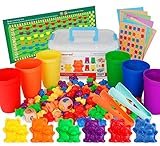
Counting, sorting by color, patterns, and simple operations - all in one set. About $12 new, often found at thrift stores.

Free Alternative: Collect 100 buttons, shells, rocks, or pasta shapes from home.
2. Number Puzzle or Cards
Number recognition, sequencing, one-to-one correspondence - around $10.

3. Wooden Pattern Blocks
Geometry, fractions, patterns, and spatial reasoning - around $18 new (often $5-8 at secondhand stores!).
Thrift Store Gold: Often found for $5-8 at secondhand stores!
Mathematics Total: $40
Free DIY Math Activities
Cost: $0-2
1. Counting Jars - Clear jars (recycled) + number labels (printed) + beans or buttons. Cost: Free.
2. Shape Hunt - No materials needed. "How many circles can you find in the house?" Cost: Free.
3. Measuring with Non-Standard Units - "How many shoes long is the couch?" Builds measurement concepts. Cost: Free.
4. Penny Counting - Save pennies. Count to 100. Group by 5s and 10s. Cost: Free.
5. Pattern Creation - Pasta, buttons, or natural items. Create AB, AAB, ABC patterns. Cost: Free.
6. Dice Games - Dice from dollar store ($1). Roll and count dots. Add two dice. Cost: $1.
Cultural/Science ($40)
Goal: Understanding the world, geography, science, nature, culture
📌 Found this helpful? Save it to your Montessori board!
What to Buy
1. Inflatable Globe
Geography awareness, countries and continents, cultural discussions - around $8. Far cheaper than the $60+ Montessori branded versions.

Free Alternative: Print a world map and laminate at the library ($1).
2. Kids Magnifying Glass
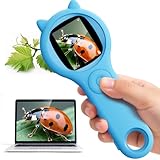
Nature study, observation skills, and scientific inquiry for about $8. An essential for outdoor explorations.
3. Science Exploration Tools
Tweezers/tongs ($6), eyedropper ($3), and small containers (~$5) open up a world of scientific process at home.
4. Art Supplies for Creative Expression

Cultural/Science Total: $40
Free DIY Cultural/Science Activities
Cost: $0
1. Nature Walk & Collection - Collect leaves, rocks, sticks, flowers. Sort and classify. Cost: Free.
2. Sink or Float Experiment - Household objects + bowl of water. Hypothesize, test, record. Cost: Free.
3. Color Mixing - Food coloring + water + small containers. Discover color combinations. Cost: $2.
4. Plant Growing - Seeds from produce (tomato, pepper, lemon) + soil. Observe growth cycle. Cost: $0-3.
5. Homemade Volcano - Baking soda + vinegar + food coloring. Chemical reaction magic. Cost: $2.
6. Magnet Exploration - Fridge magnets. Test what attracts/doesn't. Cost: Free.
7. Cultural Food Tasting - Try foods from different cultures, locate country on globe, discuss traditions. Cost: Minimal.
Complete $200 Montessori Setup: Shopping List
Budget Breakdown
| Category | Store-Bought | DIY/Free | Budget Target |
|---|---|---|---|
| Practical Life | $41 | $0-5 | $40 |
| Sensorial | $35 | $0-5 | $35 |
| Language | $41 | $0-3 | $45 |
| Mathematics | $40 | $0-2 | $40 |
| Cultural/Science | $40 | $0-5 | $40 |
| TOTAL | $197 | $0-20 | $200 |
Essential Purchases - Quick Shopping List
| Item | Area | Price | Buy |
|---|---|---|---|
| Child-safe knife set | Practical Life | $12 | Amazon |
| Small glass pitcher | Practical Life | $8 | Amazon |
| Small cups | Practical Life | $6 | Amazon |
| Kids cleaning set | Practical Life | $15 | Amazon |
| Stacking rings | Sensorial | $12 | Amazon |
| Wooden peg puzzle | Sensorial | $10 | Amazon |
| Play dough tools | Sensorial | $10 | Amazon |
| Alphabet puzzle | Language | $18 | Amazon |
| Magnetic letters | Language | $12 | Amazon |
| Counting bears | Mathematics | $12 | Amazon |
| Pattern blocks | Mathematics | $18 | Amazon |
| Inflatable globe | Cultural/Science | $8 | Amazon |
| Magnifying glass | Cultural/Science | $8 | Amazon |
| Watercolors + construction paper | Cultural/Science | $10 | Amazon |
| GRAND TOTAL | $197 | ||
What You Already Have at Home (FREE)
Kitchen Items: Bowls, spoons, measuring cups, real dishes, apron, dish towels
Household Items: Mirrors, cleaning cloths, spray bottles, baskets or bins, trays
Nature Items: Sticks, rocks, pinecones, shells, leaves, flowers, seeds
Recyclables: Cardboard boxes, plastic bottles, egg cartons, jars and lids, bottle caps
Money-Saving Shopping Strategies
Where to Find Budget Montessori Materials
1. Thrift Stores & Consignment Shops
Best Finds:
- Wooden puzzles: $1-3 (retail: $12-18)
- Building blocks: $5-10 (retail: $30-50)
- Books: $0.50-2 (retail: $8-18)
- Baskets and trays: $1-3
- Wooden toys: 50-80% off retail
Tips: Visit weekly (inventory changes fast). Check toy section AND home goods. Look for quality brands (Melissa & Doug, Hape, PlanToys).
2. Facebook Marketplace & Craigslist
Large items (climbing toys, shelves), toy lots, outgrown toys from local families. Offer 20-30% below asking price and bundle for better deals.
3. Buy Nothing Groups & Freecycle
Local Facebook groups where members give away items for free. Post specific "ISO" (in search of) requests and be active - give AND receive.
4. Garage & Yard Sales
Prime Times: Spring (April-May), Fall (September-October). Moving sales and high-income neighborhoods offer best quality. Go late for better prices, bundle items.
5. Dollar Stores
Best Buys: Baskets and bins, art supplies, trays, small pitchers, notebooks, play dough. Skip: Toys (usually cheap quality) and anything with small parts for young kids.
6. Amazon Warehouse Deals
Look for "Used - Like New" or "Used - Very Good" conditions. Great for wooden toys (durable, hard to damage).
7. End-of-Season Sales
- January: Christmas clearance (50-75% off)
- July: Summer toy clearance
- September: Back to school clearance
DIY Montessori Materials Guide
What's Worth Making vs. Buying
✅ Easy & Worth DIY:
- Sensory Bottles (Free)
- Sandpaper Letters ($3)
- Number Cards ($1)
- Counting Jars (Free)
- Texture Cards ($2)
❌ Better to Buy (Used):
- Building Blocks (hard to make quality versions)
- Puzzles (cheap used, time-consuming to make)
- Stacking Toys (precision required)
Step-by-Step DIY Projects
DIY #1: Sandpaper Letters
Materials: Cardstock or cardboard, sandpaper (ask hardware store for scraps), scissors, glue
Instructions:
- Cut cardstock into 5x7 inch cards
- Cut sandpaper into letter shapes
- Glue sandpaper letters to cards; let dry
Cost: $0-3 | Time: 30 minutes | Lasts: Years
How to Use: Trace letters with fingers, say letter sound while tracing. Builds muscle memory for writing.
DIY #2: Number Rods (Budget Version)
Materials: Craft sticks or paint stirrers (free from hardware store), red and blue paint, ruler
Instructions:
- Create rods of lengths 1-10
- Paint in alternating red and blue segments (each segment = 1 unit)
Cost: $0-5 | Time: 1 hour | Lasts: Years
DIY #3: Color Tablets
Materials: Paint chips (free from hardware store), cardstock, glue, laminating sheets (optional)
Instructions:
- Collect 3 shades each of primary and secondary colors
- Cut into uniform rectangles, glue to cardstock, laminate if possible
Cost: Free | Time: 30 minutes
How to Use: Grade from lightest to darkest, match identical colors, learn color names.
DIY #4: Practical Life Trays
- Pouring Tray: 2 small pitchers + sponge + colored water
- Scooping Tray: 2 bowls + scoop + dry beans or rice
- Tweezing Tray: Tweezers ($1) + 2 small bowls + pompoms
Cost per tray: $2-5
Budget Montessori by Age Group
Newborn to 12 Months ($80)
Priorities: Sensory exploration, motor development, vision
| Item | Cost |
|---|---|
| Black/White Mobile (or DIY) | $15 |
| Wooden Rattle | $10 |
| Board Books (library) | FREE |
| Ball | $8 |
| Baby-Safe Mirror | $15 |
| Nesting Cups | $12 |
| Simple Puzzle (3-4 pieces) | $8 |
| Total | $80 |
DIY (Free): Treasure basket with household items, sensory bottles, tummy time mat (blanket on floor)
1-2 Years ($120)
Priorities: Walking, language, independence, practical life
Core purchases: Wooden building blocks (used, $15), shape sorter ($12), practical life tools ($25), first puzzles (used, $10), art supplies ($15), play food (used, $10), musical shaker ($8), ball collection ($15). DIY free: transfer activities, food prep, nature walks.
2-3 Years ($150)
Priorities: Language explosion, imaginative play, creativity
Core purchases: Building blocks ($20), wooden train set (used, $25), alphabet puzzle ($18), counting materials ($12), puzzles ($20), play dough + tools ($13), dress-up items (thrift, $10), science tools ($12).
3-5 Years ($200)
Priorities: Pre-academics, STEM, social skills, fine motor
Core purchases: Magna-Tiles (used or budget brand, $40), LEGO Duplo (used, $20), alphabet materials ($25), math manipulatives ($30), science exploration kit ($20), puzzles ($20), board games ($15), art supplies ($20). Books: FREE (library).
What to Skip: Overpriced Montessori Items
Don't Waste Money On:
1. Rainbow Stackers ($200-300)
Beautiful but not essential. Building blocks serve the same purpose.
2. Montessori Wardrobes ($300-500)
Better Alternative: Low hooks on wall ($5), bottom drawer of existing dresser (free), or tension rod in closet at child height ($8).
3. Weaning Table & Chair ($200+)
Used for only 6-12 months. Use a highchair at the family table or floor picnic mat instead.
4. Object Permanence Box ($40-80)
Only interesting for 2-4 months. Buy used for $10-15 or DIY with a shoebox and ball.
5. Branded "Montessori" Toys
The "Montessori" markup is very real. Generic wooden versions work identically. Look for educational value, not the label.
Secondhand Safety Guidelines
✅ Safe to Buy Used:
- Wooden toys (check for splinters, lead paint on pre-1978 items)
- Board books (wipe with disinfectant)
- Puzzles (ensure all pieces present)
- Building blocks
- Art supplies (unopened or gently used)
- Plastic toys made after 2008 (post-phthalate ban)
- Baskets, trays, containers
- Furniture (check stability)
❌ Never Buy Used:
- Car seats (could be in accident - always buy new)
- Bike helmets (could be compromised)
- Cribs made before 2011 (safety standards changed)
- Recalled items - always check CPSC.gov
How to Clean Secondhand Toys
Wooden: Wipe with damp cloth → spray vinegar/water (1:1) → wipe dry immediately → air dry fully → optional beeswax finish
Plastic: Wash in warm soapy water OR top rack dishwasher → dry thoroughly
Books: Wipe covers with disinfectant → air out in sun
Free Montessori Resources
Free Printables
- Teachers Pay Teachers (filter: free) - alphabet cards, number cards, matching activities
- Montessori Print Shop - sandpaper letter templates, three-part cards
- Pinterest - endless DIY tutorials and budget ideas
Free Activities (No Materials Needed)
- Nature Walks - Science, observation, collection
- Cooking Together - Math, practical life, science
- Dance Parties - Gross motor, music
- Shadow Play - Science, creativity
- Storytelling - Language, imagination
- Sorting Laundry - Practical life, classification
- Building Forts - Engineering, imagination (couch cushions!)
- Water Play - Sensory, science
Free Community Resources
- Library Programs - Story time, STEM activities, craft workshops, toy lending
- Parks & Recreation - Free outdoor play, nature exploration
- Museums - Many offer free admission days monthly
- Community Centers - Free or low-cost classes, playgroups
Maintaining a Budget Montessori Home
One-In, One-Out Rule
New toy in = old toy out. Maintains quantity, prevents clutter, teaches letting go. Birthday gift received → choose toy to donate.
Toy Rotation (Saves Money!)
Keep 8-12 toys visible; store the rest. Rotate monthly - children rediscover stored toys as if they're brand new. Fewer toys needed total, less "I want new toy!" syndrome.
Wish List Strategy
Create specific wish lists for birthdays/holidays and share with family. Prevents random purchases, ensures you get what you actually need. Sample: wooden puzzles, math manipulatives, art supplies, board books, science tools.
Resist Impulse Buying
Apply a 24-hour waiting period for toy purchases. Ask: Do we really need this? Do we already have something similar? Can we borrow or make it?
Frequently Asked Questions
Can I do Montessori without spending any money?
Yes! Montessori is about the approach, not the stuff. Free Montessori includes: daily tasks (cooking, cleaning), nature exploration, household items, library books, following the child's interests, and creating a prepared environment (organization is free!).
Are cheap toys lower quality for learning?
Not necessarily. What matters: open-ended design, safe materials, and developmental appropriateness. A thrifted wooden block teaches the same skills as a new one. A dollar store basket functions identically to a $30 version.
How do I know if a secondhand toy is safe?
- Recall status: CPSC.gov
- Plastics: Made after 2008 (post-phthalate ban)
- Physical condition: No cracks, sharp edges, loose parts
- Stability: Furniture doesn't wobble
- Paint: No chipping (lead paint risk on older items)
Should I feel bad giving my child secondhand toys?
Absolutely not. Wooden toys are timeless, not "used." You're modeling sustainability and financial wisdom. Your child won't know or care - and what they will remember is the time you spent playing together.
What if I already bought expensive toys?
Don't feel guilty. Use what you have fully, sell what you don't use (proceeds go toward budget items), and adjust going forward. No judgment - we all learn as we go.
How do I organize on a budget?
- Baskets from dollar store: $1 each
- Repurposed existing furniture: free
- DIY shelving: cinder blocks + boards ($30)
- Labeled bins: recycled containers + printed labels (free)
- Trays: thrift store ($1-2 each)
Organization is about systems, not expensive containers.
Your $200 Montessori Action Plan
Week 1: Assess & Plan
Day 1-2: Inventory what you already have and what can be repurposed. Day 3-4: Check thrift stores, browse Facebook Marketplace, join Buy Nothing group. Day 5-7: Prioritize by what your child needs NOW vs. what can wait.
Week 2: Shop Smart
- Thrift Store Day: 2-3 stores, look for puzzles, blocks, books, baskets, trays
- Online: Facebook Marketplace pickups, Amazon budget items
- Library: Get library card, borrow 10-15 books
Week 3: DIY Projects
Make sensory bottles (2 hrs), number cards (1 hr), practical life trays (1 hr), texture cards (1 hr). Total: ~5 hours spread across the week.
Week 4: Set Up & Organize
Create accessible shelf space, label bins, set up practical life area, arrange by Montessori area. Then: show child the new environment, demonstrate 1-2 activities, allow free exploration.
Conclusion: Budget Doesn't Mean Compromise
Montessori education is accessible to every family, regardless of income. Maria Montessori would be horrified by $500 wooden toys marketed as essential for her method.
The truth:
- ✅ You can create a rich learning environment for $200
- ✅ Secondhand is smart, not shameful
- ✅ DIY materials work beautifully
- ✅ Your presence matters more than price tags
- ✅ Library books are as valuable as owned books
- ✅ Free activities build brains just as well
Remember: The most expensive Montessori material is your time, attention, and observation - and those are free.
Start Your Budget Montessori Journey Today:


📌 Save this guide to your Montessori Pinterest board to reference later!
Your child deserves a rich learning environment. Your budget doesn't have to be rich to provide it.
Related Articles: